Cocaine stays detectable in your saliva for 24 to 48 hours after use, though you’ll test positive longer if you’re a heavy user, sometimes up to 10 days. Saliva tests target benzoylecgonine, cocaine’s primary metabolite, which has a half-life of 6 to 12 hours compared to cocaine’s mere one hour. Your metabolism rate, hydration status, and frequency of use all influence how quickly your body clears these compounds and determines your actual detection window.
How Long Does Cocaine Stay in Your Saliva?
Most saliva drug tests detect cocaine and its primary metabolite, benzoylecgonine, within a 24-to-48-hour window after use, though detection times vary based on individual metabolism, dose, and test sensitivity. Oral fluid testing identifies cocaine within minutes of ingestion, making it effective for toxicology screening in workplace and roadside settings.
Your cocaine saliva detection time depends on several factors. A typical dose clears within one to two days, while heavy or frequent use may extend this window. Oral fluid cocaine test accuracy relies on proper sample collection and ELISA technology for analysis. Saliva testing reliability generally proves strong for recent exposure, though consuming food or beverages post-use can shorten detection periods. Individual liver function and hydration also influence elimination rates. Extended cocaine use can damage the liver, which plays an important role in metabolizing the drug and its byproducts. For accurate results, saliva drug tests must be performed at least 20 minutes after eating, drinking, or smoking. Chronic users should note that cocaine is detectable in saliva for 2-3 days, which exceeds the typical detection window for occasional users.
Heavy Cocaine Users May Test Positive for Up to 10 Days
While occasional users typically clear cocaine from saliva within 24 to 48 hours, chronic heavy use fundamentally alters this timeline. Your metabolic elimination rate decreases considerably with repeated exposure, as enzymes become saturated and metabolite persistence extends well beyond standard parameters.
Chronic heavy cocaine use saturates metabolic enzymes, dramatically extending saliva detection windows far beyond typical 24-48 hour clearance times.
Heavy use creates cumulative effects that push the detection window dramatically:
- Chronic use can extend saliva detection from 48 hours to 7 days
- Metabolite persistence in extreme cases reaches 10 days post-last dose
- Workplace compliance testing identifies heavy patterns within this extended window
Your body’s clearance mechanisms struggle under chronic conditions. Repeated dosing causes benzoylecgonine accumulation in oral fluids, making saliva detection far more prolonged than single-use scenarios suggest. The cardiovascular strain from chronic use, including elevated heart rate and blood pressure, further compromises your body’s ability to efficiently process and eliminate the drug. If you’re facing workplace compliance testing, understand that heavy use patterns remain identifiable extensively longer than occasional consumption. This prolonged detection is particularly concerning because chronic cocaine use can lead to long-term brain chemistry changes that compound both health risks and metabolic processing difficulties.
Why Metabolites Keep You Testing Positive Longer

When you use cocaine, your liver rapidly converts it into benzoylecgonine, a metabolite with a half-life of 6 to 12 hours compared to cocaine’s roughly one-hour half-life, meaning it clears from your system far more slowly than the parent drug. If you use repeatedly, benzoylecgonine accumulates in your tissues faster than your body can eliminate it, extending the window during which saliva tests detect its presence. This metabolite accumulation explains why you can test positive days after your last use, even when cocaine itself has long since cleared your oral fluids. Several factors influence how long metabolites remain detectable, including individual metabolism, kidney function, and the amount consumed, all of which can significantly shorten or extend your detection window.
Benzoylecgonine Persists Longer
Because your liver converts cocaine into benzoylecgonine almost immediately after use, this metabolite, not the parent drug, becomes the primary target for detection. The pharmacokinetics differ considerably: cocaine’s half-life spans 1.5, 6 hours, while benzoylecgonine persists with a half-life of 5.5, 7.5 hours, effectively doubling your detection window.
Advanced confirmatory methods shape detection thresholds extensively:
- Liquid chromatography tandem mass spectrometry can identify benzoylecgonine up to 17, 22 days post-use at lower cut-offs
- Gas chromatography mass spectrometry improves reliability for confirming cocaine metabolites in biological samples
- Heavy users exhibit extended half-lives reaching 180 hours due to complex metabolism patterns
Your body’s elimination follows a biphasic model, rapid initial clearance followed by slow beta decay. This prolonged phase explains why benzoylecgonine achieves urine concentrations 50, 100 times higher than cocaine itself. Research indicates that using the standard 100 ng/mL cut-off results in a 51.9% false negative rate, meaning over half of cocaine users may go undetected with current confirmatory thresholds. Several individual characteristics influence how long the metabolite remains detectable, including liver function and overall health status, which directly affect how efficiently your body processes and eliminates these compounds.
Metabolite Accumulation Effects
Benzoylecgonine’s extended half-life explains only part of why you’ll test positive long after cocaine’s effects fade, metabolite accumulation compounds this detection advantage through distinct pharmacokinetic mechanisms.
Your liver converts cocaine into multiple cocaine metabolites simultaneously, including benzoylecgonine and ecgonine methyl ester. These compounds appear in saliva within minutes of use, and their concentrations rise as cocaine levels decline. This metabolite accumulation pattern extends your metabolite detection window to 1, 3 days. Research shows that metabolite-to-cocaine ratios continued increasing over 48 hours in oral fluid, demonstrating ongoing metabolite presence as the parent drug cleared.
Inter-subject variability greatly affects how long metabolites persist. Your pseudocholinesterase enzyme levels, hydration status, and liver function determine elimination rates. Chronic users demonstrate prolonged detection compared to single-dose exposure. With urine testing, heavy or frequent users may show positive results for up to two weeks due to this cumulative metabolite buildup.
Research confirms metabolite correlation across matrices, oral fluid concentrations track plasma levels despite individual differences. Saliva tests target these accumulated metabolites rather than cocaine alone, capturing use well beyond the parent drug’s clearance.
Factors That Affect Your Detection Window
Several physiological and behavioral variables determine how long cocaine and its metabolites remain detectable in your saliva. Your metabolism rate variability plays a critical role, faster hepatic processing accelerates cocaine clearance timeline, while slower metabolism extends detection beyond typical windows. Hydration status directly influences drug metabolites concentration, as increased fluid intake dilutes oral fluid samples. Individuals with higher body mass may also experience different clearance rates since larger body fat percentages can affect how the body stores and processes substances.
Your body’s unique metabolism and hydration levels significantly influence how quickly cocaine metabolites clear from oral fluid samples.
Key factors affecting substance abuse testing results include:
- Frequency and dosage: Chronic users retain metabolites up to 10 days, whereas occasional users clear within 48 hours
- Oral fluid collection device methodology: Citric acid stimulation reduces concentrations five-fold compared to passive drool techniques
- Testing sensitivity thresholds: Including benzoylecgonine detection increases assay sensitivity to 80%
Your individual pharmacokinetics, combined with collection protocols, ultimately dictate whether samples yield positive results during standard detection windows. It’s worth noting that urine and blood tests are typically more accurate than saliva tests when precise detection is required. Additionally, certain substances like prescription medications, antihistamines, and antidepressants may cause false positive results, so disclosing all medications to the testing administrator is essential for accurate interpretation.
How Saliva Tests Detect Cocaine
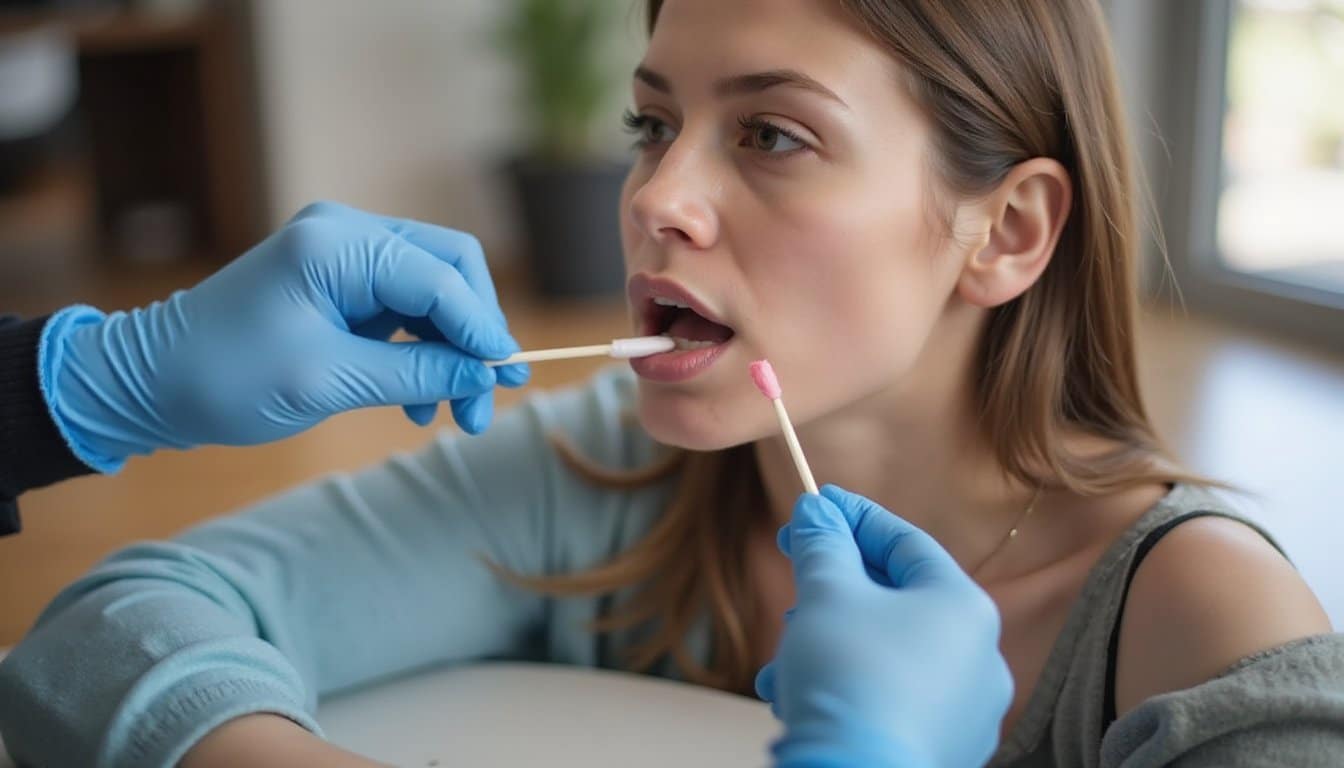
When you undergo a saliva test for cocaine, a trained collector uses a mouth swab or specialized oral fluid device to obtain your sample under direct supervision, minimizing any opportunity for tampering. The laboratory then screens your saliva for cocaine and its primary metabolite, benzoylecgonine, using enzyme immunoassay techniques before confirming positive results with gas chromatography-mass spectrometry or liquid chromatography-tandem mass spectrometry. These advanced mass spectrometry methods can detect cocaine levels as low as 0.1 ng/mL in neat oral fluid, ensuring highly accurate results. You’ll typically receive negative screening results within 24-36 hours, while confirmed positive results require approximately 72 hours due to the additional chromatographic analysis. It’s important to note that self-reports of cocaine use tend to be less accurate than saliva test results, making these objective tests essential for maintaining accountability during recovery.
Mouth Swab Collection Process
Oral fluid testing detects cocaine through a straightforward collection process that requires minimal equipment or specialized training. During a mouth swab drug test, you’ll have a cotton swab placed inside your cheek for several minutes to collect adequate sample volume. The saliva drug test window captures peak concentration timing, typically within hours of use.
- Chain of custody procedures guarantee sample integrity from collection through laboratory analysis
- Oral contamination from recent use can elevate initial readings, requiring waiting periods before testing
- Detection variability factors include hydration levels, oral pH, and time since last use
Residual oral contamination may persist longer than systemic drug levels, potentially affecting results. Collectors follow standardized protocols to minimize environmental interference and maintain analytical accuracy throughout the testing process.
Metabolite Detection Methods
| Method | Sensitivity | Analysis Time |
|---|---|---|
| Immunoassay | Qualitative screening | Minutes |
| SERS-based detection | 10, 50 ng/mL | 15.5 minutes |
| GC confirmation | High specificity | Extended |
Understanding cocaine pharmacokinetics reveals why saliva concentrations reach 4.9 times higher than serum levels. The metabolite-to-parent ratio helps establish detection windows of 1, 2 days. Comparative advantages include plasma-equivalent drug levels and superior sample integrity versus urine, making oral fluid testing analytically rigorous for recent exposure confirmation.
Results Turnaround Time
How quickly can you expect saliva test results after cocaine exposure? Instant on-site screens deliver presumptive findings within 5-10 minutes, detecting cocaine metabolite presence in saliva through rapid immunoassay technology. However, laboratory confirmation testing requires additional time, typically 1-3 days for negative results, extending up to 5 days when positives require clinical toxicology review.
Key factors affecting your turnaround time include:
- Chain of custody protocols add processing steps that extend reporting timelines
- False positive screens trigger confirmatory ELISA analysis, adding 2-3 days
- False negative risk decreases with lab verification but requires patience
Understanding drug half life helps contextualize these windows. Since cocaine’s hepatic metabolism produces detectable metabolites for 24-48 hours, timing your test relative to exposure directly impacts result accuracy and turnaround expectations. Understanding drug half-life helps contextualize these windows. The cocaine detection times in blood are typically about 24, 48 hours because hepatic metabolism rapidly converts cocaine into measurable metabolites. As a result, timing your test relative to exposure directly affects result accuracy and interpretation.
Saliva vs. Urine vs. Blood Detection Times
When comparing detection methods, each testing matrix offers distinct pharmacokinetic advantages based on cocaine’s distribution and elimination patterns throughout the body. Saliva detection captures immediate exposure within a 24, 48 hour detection window, while urine detection extends to 3, 4 days for casual users and up to two weeks for chronic users. Blood detection offers the shortest timeframe at 12, 48 hours but provides forensic toxicology analysis precision for recent impairment. When comparing detection methods, each testing matrix offers distinct pharmacokinetic advantages based on cocaine’s distribution and elimination patterns. If you’re wondering how long cocaine stay in urine, the window typically extends 3, 4 days for occasional users and up to two weeks for chronic users. By contrast, saliva testing captures very recent exposure within about 24, 48 hours, while blood testing offers the shortest window, roughly 12, 48 hours, but with high forensic precision for recent impairment.
| Testing Matrix | Detection Window |
|---|---|
| Saliva | 24, 48 hours |
| Urine | 3, 4 days (up to 14 days) |
| Blood | 12, 48 hours |
| Saliva (heavy use) | Up to 10 days |
| Urine (heavy use) | Up to 2 weeks |
Your detection factors include metabolism, hydration, and use frequency, all critical variables in stimulant drug testing outcomes.
What to Expect Before a Saliva Drug Test
Understanding detection windows across different biological matrices provides useful context, but practical preparation for saliva testing requires specific procedural knowledge. Whether you’re facing federal workplace drug testing or roadside drug testing, you’ll need to abstain from eating, drinking, or smoking for at least 10 minutes before collection. The oral fluid detection window hours for cocaine typically spans 24, 48 hours, with cutoff concentration levels determining positive results.
Key preparation steps include:
- Maintain good oral hygiene by brushing teeth, gums, and tongue to remove surface residues
- Hydrate adequately to guarantee sufficient saliva production during collection
- Avoid poppy seeds and energy drinks that may trigger false positives
Your saliva drug screen duration affects detection of both acute cocaine use detection and chronic cocaine use detection patterns differently. Your saliva drug screen duration affects detection of both acute and chronic cocaine exposure in different ways. Understanding the signs of cocaine usage alongside these testing windows helps place results in context, since saliva primarily reflects recent use rather than long-term patterns.
Compassionate Care Is Just One Call Away
Saliva testing for cocaine is increasingly common in roadside and workplace settings knowing how long it remains detectable helps individuals understand the real-world consequences of recent use. Luxury rehab near me provides comprehensive cocaine detox california tailored to every stage of your recovery with evidence-based methods and genuine compassion. Serving individuals throughout Pasadena, our +1 (626) 323-8629 team is available around the clock to help you take the next step toward a lasting, fulfilling recovery.
Frequently Asked Questions
Can Secondhand Cocaine Smoke Cause a Positive Saliva Test Result?
No, secondhand cocaine smoke won’t cause you to fail a saliva test under normal circumstances. Drug screens use threshold levels specifically designed to distinguish trace environmental exposure from actual use. Research shows passive inhalation produces only minimal traces, less than 1 ng/mL, in exposed individuals, falling well below standard cutoff concentrations. You’d need direct, intentional use to reach detectable metabolite levels that trigger a positive result.
Does Drinking Water or Using Mouthwash Help Clear Cocaine From Saliva Faster?
No, drinking water or using mouthwash won’t meaningfully accelerate cocaine clearance from your saliva. Saliva tests detect cocaine and benzoylecgonine that diffuse from your bloodstream into oral fluids, not surface residue you can rinse away. Since your liver metabolizes cocaine at a fixed enzymatic rate, superficial oral rinsing doesn’t alter systemic drug elimination. Detection depends on blood-to-saliva diffusion kinetics, which remain unaffected by hydration or mouthwash use.
Will Prescription Medications Cause a False Positive for Cocaine on Saliva Tests?
Prescription medications rarely cause false positives for cocaine on saliva tests. Modern immunoassays specifically detect benzoylecgonine, cocaine’s primary metabolite, and they’re designed to minimize cross-reactivity with other compounds. Common antibiotics, antidepressants, and local anesthetics like lidocaine don’t reliably trigger cocaine false positives. If you receive an unexpected positive result, you’ll undergo confirmatory GC-MS testing, which distinguishes cocaine metabolites from any interfering substances with high analytical precision.
Can a Single Use of Cocaine Be Distinguished From Regular Use in Saliva?
You can’t reliably distinguish single from regular cocaine use with a standard saliva test. These assays detect cocaine and benzoylecgonine presence, not usage patterns. However, pharmacokinetic differences exist: chronic users accumulate metabolites, extending detection beyond 48 hours (sometimes 3, 10 days), while occasional users typically clear within 24, 48 hours. Without serial testing or quantitative analysis comparing metabolite concentrations over time, a single positive result doesn’t differentiate isolated exposure from habitual use.
Are At-Home Saliva Drug Tests as Accurate as Laboratory Saliva Tests?
At-home saliva tests aren’t as accurate as laboratory tests. You’ll find home kits use immunoassay technology achieving roughly 97% accuracy, but they lack confirmatory testing. Labs employ mass spectrometry (GC-MS or LC-MS/MS) as the gold standard, delivering specificity from 0.93 to 1.00. For cocaine specifically, sensitivity reaches only 0.63 in initial screens. Home tests work as preliminary screens, but labs provide legally defensible results with superior analytical precision.