
Cocaine typically stays in your blood for 12 to 24 hours after use, but its primary metabolite, benzoylecgonine, remains detectable for up to 48 hours. Your liver's esterases and CYP3A4 enzymes rapidly break down cocaine, which has a half-life of approximately 1.5 hours. Blood tests target benzoylecgonine because it persists longer than the parent drug. Detection times vary based on your dosage, metabolism, and frequency of use, factors you'll understand more thoroughly below.
 How quickly does cocaine clear from your bloodstream? After you use cocaine, it enters your blood plasma within minutes and begins rapid distribution throughout your body. Your liver metabolism breaks down the drug primarily through esterases, with cytochrome P450 enzymes playing a secondary role in this process. Cocaine itself has a half-life of approximately 1.5 hours, meaning you'll typically eliminate the parent compound within 12 hours. However, blood test sensitivity can detect the metabolite benzoylecgonine for up to 48 hours post-use. For chronic users, detection windows may extend to two full days due to tissue accumulation. Cocaine itself has a half-life of roughly 1.5 hours, so the parent compound is usually cleared within about 12 hours. However, understanding the impact of cocaine on the body requires looking at benzoylecgonine, which blood tests can detect for up to 48 hours after use. In chronic users, tissue accumulation may extend this window to two full days. Several factors influence your clearance rate: dosage amount, frequency of use, hepatic function, and overall metabolic health. Single-dose users generally clear cocaine faster than those with repeated exposure patterns. Additionally, factors like age, weight, and individual liver function can significantly impact how quickly your body processes and eliminates the drug. The purity of the cocaine consumed also plays a role in determining how long the substance remains detectable in your system.
 Several physiological and behavioral variables determine how long cocaine remains detectable in your bloodstream beyond the typical 12-to-24-hour window. Your body's pharmacokinetics and pharmacodynamics directly influence drug metabolism rates, with individual enzyme activity playing a critical role. The liver function effect is substantial, impaired hepatic processing slows cocaine breakdown, extending detection to 48 hours. Similarly, the kidney function effect impacts metabolite elimination; compromised renal filtration prolongs clearance times considerably. Butyrylcholinesterase and hepatic enzymes convert cocaine into benzoylecgonine, the primary metabolite that drug tests actually detect. Body mass influence matters because higher fat percentages allow cocaine accumulation in adipose tissue, releasing metabolites gradually. Age affects processing efficiency, with older individuals demonstrating slower metabolism. Additionally, daily users face longer detection windows compared to occasional users due to accumulation of the drug in their system. Hydration levels also play a role, as adequate fluid intake supports the elimination of cocaine through urine, sweat, and saliva. Drug interactions complicate clearance further. Alcohol consumption produces cocaethylene, a metabolite with extended half-life. Certain medications, including antidepressants and antifungals, inhibit hepatic enzymes, prolonging cocaine's presence in your blood.
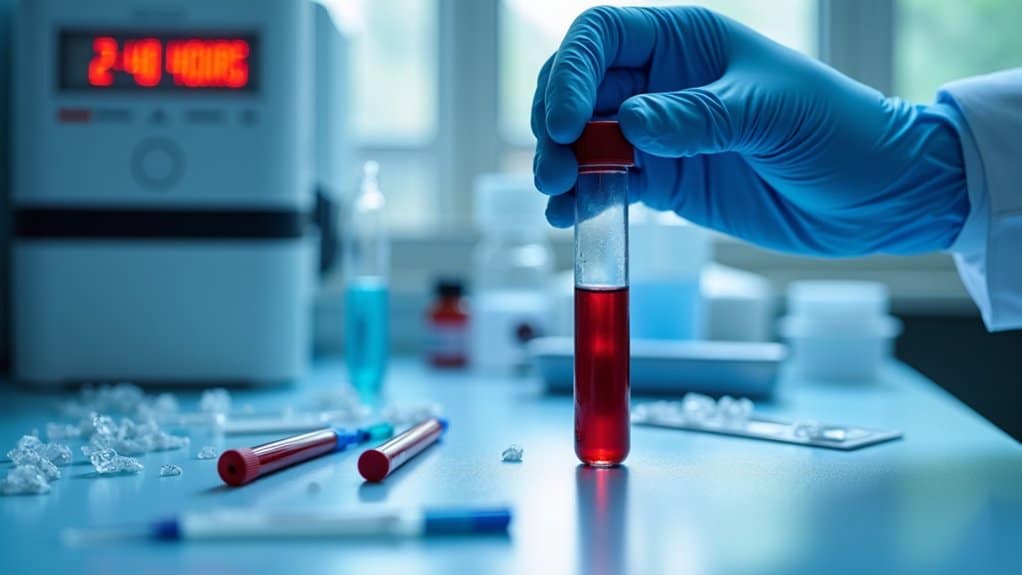
 When you undergo a blood test for cocaine, laboratories don't just search for the parent drug, they primarily target benzoylecgonine (BE), cocaine's principal metabolite. After cocaine crosses the blood brain barrier and produces its effects, hepatic esterases rapidly hydrolyze it into BE, which accumulates at concentrations 50-100 times higher than the parent compound. In forensic toxicology and clinical toxicology settings, BE's extended plasma half life makes it the preferred biomarker. While cocaine remains detectable for only 2-12 hours, benzoylecgonine blood levels persist up to 48 hours post-exposure. Confirmatory LC-MS/MS methods quantify BE alongside ecgonine methyl ester and cocaethylene with limits of detection as low as 1-10 ng/mL. Individual detection times can vary significantly based on genetic factors and personal traits that influence how quickly the body processes these metabolites. According to FDA drug label information, cocaine and its metabolites may be detected in plasma for up to one week depending on the sensitivity of the assay method utilized. It's important to note that initial immunoassay screening tests may produce false positives from substances like local anesthetics or certain medications, which is why confirmatory GC-MS or LC-MS/MS testing is essential for accurate results. Ultimately, renal excretion eliminates these metabolites, but BE's slower clearance provides laboratories with a more reliable detection window than cocaine itself.
How Long Does Cocaine Stay in Your Blood?
How Your Body Breaks Down Cocaine in the Bloodstream
Understanding how quickly cocaine clears from your blood requires examining the specific metabolic pathways your body uses to break it down. Your liver serves as the primary site for cocaine metabolism rate processes. Hepatic esterases, including carboxylesterase type 1 and butyrylcholinesterase, hydrolyze cocaine into two key metabolites: benzoylecgonine and ecgonine methyl ester. CYP3A4 enzymes produce norcocaine through N-demethylation. Benzoylecgonine is the primary metabolite that drug tests screen for because it persists in the body long after cocaine's effects have subsided. Norcocaine is considered highly hepatotoxic, which contributes to liver damage in chronic cocaine users.Your liver's specialized enzymes break cocaine into detectable metabolites through precise biochemical pathways.Cocaine half life averages 40-90 minutes in blood, meaning concentrations halve approximately every hour. This short cocaine blood detection time reflects rapid enzymatic breakdown and distribution. Cocaine bioavailability routes influence detection windows, intravenous administration shows shorter half-life compared to insufflation. Your kidneys eliminate metabolites through urine, with hydration affecting excretion speed. Cocaine binds to plasma proteins at 90%, distributing rapidly to brain, spleen, kidneys, and lungs before metabolic clearance occurs.
What Makes Cocaine Stay in Your Blood Longer?

How Heavy or Frequent Use Extends Detection Time
The frequency and intensity of cocaine use directly determine how long the drug and its metabolites remain detectable in your blood. If you're an occasional user, expect blood detection windows of 12, 24 hours. However, heavy use extends this period to 48 hours due to dose dependent clearance mechanisms and metabolite accumulation. Chronic cocaine use creates compounding effects. Your liver continuously processes cocaine, but repeated dosing overwhelms enzymatic capacity, causing benzoylecgonine buildup. When you combine cocaine with alcohol, your liver produces cocaethylene, further prolonging detection times. This combination is particularly dangerous because cocaethylene is associated with a significantly increased risk of immediate death compared to cocaine alone. The frequency of use impact is significant, daily users face substantially longer clearance periods than occasional users. Understanding blood versus urine detection differences matters: while blood tests capture recent use, urine detects metabolites for days longer. Continued frequent use can also lead to long-term brain chemistry changes and addiction, compounding the health risks beyond detection concerns. The frequency of use has a major impact, daily users typically face much longer clearance periods than occasional users. Understanding blood versus urine differences is key: blood tests capture very recent use, while urine identifies metabolites for days longer. Recognizing the Signs of cocaine user alongside these timelines helps interpret risk more accurately, since continued frequent use can drive long-term brain chemistry changes and deepen addiction beyond simple detection concerns.What Blood Tests Actually Detect: Cocaine or Metabolites?
Blood vs. Urine, Saliva, and Hair Detection Windows
When you're trying to understand cocaine detection, you'll find that blood tests offer the shortest detection window at 12-48 hours, while urine screens can identify metabolites for 2-14 days depending on usage frequency. Saliva testing provides an intermediate window of 1-2 days for occasional use, extending to 3-4 days with heavy consumption. Hair follicle analysis delivers the longest retrospective view, capturing drug exposure for up to 90 days as metabolites become incorporated into the hair shaft during growth. The method of ingestion also matters, as cocaine that is snorted or dabbed may have a longer detection window compared to smoking or injecting.Blood Detection Time Frames
Understanding how quickly cocaine clears out of different biological specimens helps clarify why various testing methods serve distinct purposes. The cocaine blood half life ranges from 1 to 1.5 hours, meaning cocaine plasma concentration drops rapidly after use. Your central nervous system experiences effects while the drug circulates, but cocaine elimination time progresses quickly as your liver and kidneys process the substance. The cocaine blood test window typically spans 12 to 48 hours, depending on usage patterns. Occasional users show detectability for 12 to 24 hours, while heavy users may test positive for up to 48 hours. Blood tests detect parent cocaine rather than metabolites, making them ideal for identifying recent use. After approximately 7.5 hours, cocaine itself often becomes undetectable, though benzoylecgonine remains present up to 48 hours. In contrast, hair tests can detect cocaine for up to 90 days, providing a much longer window for identifying past substance use. Urine testing offers a middle ground, with detection possible for 2-4 days after single use and extending to two or more weeks for chronic users.Urine Testing Windows
Urine testing detects cocaine metabolites for substantially longer periods than blood analysis, with detection windows extending 2-4 days for occasional users and up to 10-14 days for chronic users. Toxicology screening primarily targets benzoylecgonine at cutoff levels of 300 ng/mL, as this metabolite persists after cocaine clears from circulation. Your detection window depends on several factors: usage frequency, dosage amount, metabolic rate, kidney function, and urine pH. Heavy users experience extended detection because repeated cocaine exposure affects dopamine transporter, norepinephrine transporter, and serotonin transporter systems, indicating potential substance use disorder patterns. Standard immunoassay screens provide initial results, but confirmatory GC-MS testing offers definitive identification. While blood analysis captures recent use within 12-24 hours, urine remains the preferred specimen for establishing cocaine exposure over broader timeframes.Hair and Saliva Comparisons
Beyond urine analysis, hair and saliva specimens offer distinct detection capabilities that serve different clinical and forensic purposes. Hair testing identifies cocaine breakdown products for up to 90 days, with heavy users showing detectability beyond this threshold. A 1.5-inch sample reveals approximately three months of use patterns as metabolites incorporate into the hair shaft during growth. Blood versus saliva testing shows comparable short windows, blood at 12, 48 hours and saliva at 24, 48 hours, extending to 2, 3 days for frequent users. Saliva detects acute cocaine use within minutes, making it valuable alongside emergency medicine protocols. Both methods identify cocaethylene formation alcohol produces when combined with cocaine. Detection cutoffs vary by testing methodology, with hair providing historical exposure data while blood and saliva confirm recent consumption. Purity level and administration method significantly influence how long metabolites remain detectable across all specimen types. Blood versus saliva testing shows similarly short windows, blood at about 12, 48 hours and saliva at 24, 48 hours, extending to 2, 3 days for frequent users. Understanding cocaine detection in saliva tests highlights why oral fluid screening is useful in emergency settings, since saliva can identify acute use within minutes. Both methods can also reveal cocaethylene formation when cocaine is combined with alcohol. Detection cutoffs vary by methodology, with hair reflecting historical exposure while blood and saliva confirm more recent consumption.When Are Blood Tests Used to Detect Cocaine?
Blood tests for cocaine detection serve specific clinical, legal, and occupational purposes where confirming recent or active drug exposure is critical. Whether you've used intravenous cocaine, intranasal cocaine, or smoked cocaine, blood testing captures the acute intoxication timeline when active drug presence matters most. Healthcare providers order blood tests during medical emergencies involving suspected overdose or cardiac complications. The post use detection period of 12-48 hours makes blood specimens ideal for verifying recent exposure rather than historical use. Legal contexts frequently require blood testing for DUI cases or probation compliance, where cocaine blood test accuracy through confirmation methods like GC-MS provides court-admissible results. High-liability employers in transportation and healthcare sectors utilize blood specimens when detecting active impairment is essential. Clinical monitoring programs also employ repeated blood tests to assess ongoing substance abuse or treatment effectiveness.Can You Flush Cocaine From Your Blood Faster?
You can't accelerate cocaine's elimination from your blood through hydration, exercise, or dietary changes because your liver metabolizes the drug at a fixed enzymatic rate with a half-life of approximately one hour. Despite popular myths, drinking excessive water only risks triggering dilution detection protocols during testing without shortening the 12-48 hour blood detection window. Your body's pharmacokinetic processes, not external interventions, determine how quickly cocaine and its metabolite benzoylecgonine clear from your system.Hydration and Metabolism Myths
How quickly can you actually eliminate cocaine from your bloodstream through hydration or other home remedies? Despite popular belief, your hydration status has trivial direct impact on cocaine clearance rate. While adequate fluid intake supports general metabolic function, it won't drastically accelerate the elimination of cocaine residual metabolites from your blood. Your age related metabolism and liver enzyme activity remain the primary determinants of processing speed. Medical drug testing detects benzoylecgonine regardless of water consumption. Additionally, alcohol interaction cocaethylene formation actually prolongs toxicity and detection windows. Evidence demonstrates that no home remedy reliably shortens blood detection times. Factors like chronic use history, liver health, and individual enzymatic efficiency far outweigh hydration effects. Attempting to "flush" cocaine through excessive water intake risks electrolyte imbalances without meaningfully altering test outcomes.Why Detox Methods Fail
Given that hydration and home remedies produce negligible effects on cocaine clearance, many people turn to commercial detox products or alternative flushing methods, yet these approaches fail for fundamental biochemical reasons. Understanding how long cocaine stays in blood requires recognizing that cocaine detection time in blood depends on hepatic enzyme activity, not external interventions. After cocaine rapid absorption occurs, cocaine peak plasma levels trigger metabolic conversion to benzoylecgonine, a process you can't accelerate artificially. Why detox methods fail:- Cocaine metabolite duration persists regardless of flushing attempts because benzoylecgonine binds to tissues during cocaine systemic circulation
- Commercial kits don't enhance esterase enzyme function responsible for hydrolysis
- Detection windows (12, 48 hours blood, 4+ days urine) remain fixed by pharmacokinetics