Blood tests detect
active THC in your system for 12-48 hours after occasional use, extending to seven days with
chronic consumption. Saliva tests identify
recent use within 24-72 hours, while hair follicle analysis reveals consumption patterns up to 90 days back. You'll find that blood and saliva measure psychoactive compounds indicating current intoxication, whereas hair tests detect metabolites showing
historical exposure without confirming impairment. Each method's detection window, accuracy, and reliability varies considerably depending on your usage frequency and the specific compounds being measured. Additionally, the
thc vape detection duration may differ from other consumption methods due to the way THC is metabolized when inhaled. Users of THC vape products might find traces in their system for a shorter or longer period depending on factors such as dosage and individual metabolism.
How Long Each Test Can Detect THC in Your System
Understanding
THC detection windows requires examining how each testing method interacts with the body's metabolic pathways and elimination processes.
Weed detection in saliva and blood targets active THC, offering insight into recent consumption, blood tests detect THC for
12, 48 hours in occasional users and up to 7 days in chronic users, while saliva tests identify use within 24, 72 hours.
Urine testing provides the broadest window, detecting inactive metabolites for 1, 3 days after single use and extending to 30 days or more with daily consumption.
Hair follicle analysis offers the longest detection period at 90 days, though it's less reliable for acute use.
Detection variability stems from usage frequency, body composition, THC potency, metabolic rate, and test sensitivity thresholds. Multiple factors influence detection outcomes, including
method of consumption, gender, hydration levels, and individual metabolism. Blood tests measure concentrations in either
whole blood or serum, with whole blood readings approximately half the value of serum or plasma measurements.
False positives are rare in hair testing, with studies showing no non-users testing positive while 77% of heavy users and 39% of light users returned positive results.
What Each Testing Method Actually Measures
When you undergo
cannabis testing, it's critical to understand that different methods measure distinct chemical compounds that indicate either recent impairment or past exposure. Blood and saliva tests detect
active THC (delta-9-THC), the psychoactive compound directly linked to intoxication within hours of use, while urine and hair tests primarily identify
THC-COOH, an inactive metabolite that signals
historical consumption rather than current impairment. This fundamental distinction between parent compounds and metabolites determines whether test results reflect your present functional state or merely document prior cannabis use days or weeks earlier. The detection accuracy depends on
analytical procedures used to verify recent cannabis use and distinguish between different metabolites in biological samples.
Hair testing uniquely measures the parent metabolite embedded directly in the hairshaft, providing a 90-day detection period that captures long-term usage patterns unavailable through other testing methods.
Immunoassay screening methods cannot distinguish between delta-8 THC and delta-9 THC isomers, meaning these structurally similar compounds produce identical positive results despite their different legal statuses and sources.
Although
cannabis testing methods share the common goal of detecting marijuana use, they differ fundamentally in what they actually measure, active THC versus its metabolites. Blood tests detect THC in blood plasma, measuring delta-9-tetrahydrocannabinol, the psychoactive compound responsible for intoxication. This makes
THC blood test detection time relatively short: 1, 7 days for occasional users, occasionally extending to 30 days for chronic consumers.
Saliva tests similarly detect
active THC, providing evidence of very recent consumption within 24, 72 hours. Blood testing provides
exact drug concentration levels, making it particularly valuable for determining the degree of active impairment. Conversely, hair and urine tests measure
THC-COOH and other metabolites, breakdown products your body produces after processing cannabis. THC is
broken down in the liver into over 100 different metabolites through the metabolization process. These metabolites persist far longer than active THC but don't indicate current impairment. Urine tests typically employ a
detection threshold of 50 ng/mL to determine positive results, though laboratories can use more sensitive testing when required. Understanding this distinction is critical: active THC signals recent use and potential intoxication, while metabolites reveal
historical exposure without confirming
present effects.
Impairment vs. Historical Use
The core challenge in
cannabis testing lies in the disconnect between
detection and impairment, no current biological test objectively measures
functional deficit from THC.
Weed blood test detection time spans 1, 25 days but cannot confirm present impairment, as concentrations drop rapidly while chronic users may test positive after effects subside.
THC saliva test duration extends to 72 hours, overlapping recent use windows yet failing to correlate with motor or cognitive function.
Weed hair follicle test time frame reaches 90 days, revealing historical patterns but offering zero insight into acute impairment or timing of last use. Each method confirms exposure across different windows, blood for recent intake, saliva for very recent consumption, hair for chronic patterns, but none reliably establish
functional impairment at testing time, limiting their utility in
safety-critical assessments. The presence of
THC metabolites alone does not indicate recent use, as chronic users can release stored THC from fatty tissues for up to 30 days after last consumption, further complicating interpretation of test results. Traditional urine tests measure
inactive THC metabolite rather than active compounds, making them particularly unsuitable for determining whether cannabis use occurred recently or weeks earlier. Research shows
exhaled breath testing can detect Δ9-THC for approximately 2 hours after smoking, offering a narrower window that may better align with the actual impairment period compared to traditional biological matrices.
Accuracy and Reliability of Blood, Saliva, and Hair Tests
Blood tests demonstrate high
analytical precision when measuring THC concentrations, yet they suffer from
fundamental limitations in practical reliability. While
LC-MS/MS methods detect THC with technical accuracy, blood concentrations correlate poorly with actual impairment, particularly among regular users. This weakness undermines their forensic utility compared to blood vs
urine test for THC applications. Saliva tests offer
noninvasive collection but face similar
validity challenges. Their 8, 24 hour
detection window doesn't reliably predict cognitive dysfunction, and false positives remain problematic for roadside screening protocols. Hair follicle analysis confirms chronic exposure over months but cannot determine recent use or impairment timing.
External contamination risks and bias toward darker hair further compromise accuracy. Critically, none of these biofluid methods establish statistically valid thresholds linking THC levels to functional impairment. Research has documented cases of
significant functional impairment occurring alongside low THC levels in biological samples. Individuals should
wait 3-10 hours after cannabis consumption before engaging in safety-sensitive activities such as driving or operating machinery. Whole blood analysis provides critical advantages in forensic contexts, as it remains
the only available specimen in many impaired driving and accident causation investigations where plasma separation is not feasible.
Tampering Risks and Specimen Integrity Across Testing Methods
- Blood specimens resist adulteration via tamper-evident tubes and immediate processing
- Saliva's short detection window limits tampering effectiveness despite pre-collection rinsing attempts
- Hair samples tolerate chemical reduction through undetectable shampooing protocols
- Environmental contamination creates false positives in hair analysis
- Chain-of-custody documentation deters but cannot prevent pre-collection manipulation
- Detox shampoos only treat hair exterior while metabolites remain embedded within the internal structure during the 90-day detection period
Cost Comparison and Results Turnaround Times
When you're selecting a THC detection method,
cost and
turnaround time greatly influence practical implementation.
Blood tests command the highest price at $100, $400 with 1, 3 day results, while
saliva tests offer the most economical option at $15, $75 with minutes-to-hours turnaround for rapid screening. You'll face a critical trade-off: lab-based methods deliver superior accuracy at 2, 4 times the cost of point-of-care alternatives, but onsite rapid tests provide immediate actionable results despite lower confirmatory precision.
Cost Breakdown by Method
- Blood testing incurs highest per-test expense and longest wait time
- Saliva methods balance affordability with rapid results delivery
- Hair analysis provides extended detection at moderate premium pricing
- Confirmatory testing adds $40, $100 across all matrices
- Laboratory cannabinoid profiling costs $65, $75 with 2, 3 day turnaround
Lab vs. Onsite Speed
How quickly you receive THC test results depends fundamentally on whether you choose laboratory analysis or onsite screening. Onsite saliva devices deliver actionable findings within 5, 15 minutes, making them guarantee for roadside enforcement and workplace incidents. Conversely, lab-based blood and hair analyses require sample transport and complex extraction protocols, extending turnaround to 24 hours or several days. Blood tests typically take 1, 3 days at centralized facilities, while hair follicle testing demands up to one week due to decontamination and batch processing. This thc testing methods comparison reveals critical trade-offs: onsite methods prioritize speed but often require lab confirmation for legal admissibility, whereas laboratory testing secures quantitative accuracy at the expense of immediacy. Additionally, the duration that THC remains detectable varies based on factors such as metabolism, frequency of use, and the type of test administered. For those wondering
how long does weed stay in body, occasional users may find that THC clears within a few days, while heavy users might experience detection for weeks.
| Method |
Onsite Turnaround |
Lab Turnaround |
| Blood |
Not feasible |
1, 3 days |
| Saliva |
5, 15 minutes |
1, 3 days |
| Hair |
Not feasible |
5, 7+ days |
Accuracy vs. Budget Trade-offs
Speed and precision don't always align when
selecting a THC test, and
budget constraints force organizations to weigh accuracy against affordability.
Blood tests deliver the most reliable
active THC quantification but cost $100, $400 per sample with 24, 72 hour turnaround.
Saliva tests range $15, $50 with results in minutes, ideal for high-volume screenings despite lower sensitivity.
Hair follicle tests ($60, $300+) provide 90-day detection but require days for processing and risk environmental contamination. A
thc detection chart reveals saliva and urine tests typically stay under $120, favoring mass testing scenarios, while blood and hair methods suit legal or compliance contexts demanding precision over
cost-effectiveness.
Key Budget-Accuracy Considerations:
- Blood tests maximize accuracy but triple costs compared to saliva alternatives
- Saliva's rapid turnaround reduces labor expenses for on-site screening
- Hair tests justify higher costs only when long-term history is essential
- False positives from hair contamination undermine cost-per-accurate-result ratios
- Saliva's 24-hour window limits historical insight despite affordability
Best Use Cases: When Each Test Type Is Recommended
When selecting an appropriate
THC detection method, you must align the test type with the specific
screening context,
timeline requirements, and
evidentiary standards.
Saliva tests excel in roadside enforcement and workplace screenings, delivering rapid, non-invasive results for recent consumption within 72 hours.
Blood tests are reserved for clinical emergencies and legal proceedings requiring precise impairment quantification and active THC concentration measurement.
Hair follicle analysis serves forensic investigations and rehabilitation monitoring, establishing long-term use patterns across 90 days. Workplace settings typically employ saliva or urine tests to minimize adulteration risks, while emergency departments prioritize blood sampling for multi-panel co-intoxication assessment. Legal cases demand hair or blood evidence depending on whether you're establishing historical patterns or incident-specific timelines, though hair tests face accuracy challenges from external contamination.
Frequently Asked Questions
Can Prescription Medications or CBD Products Cause False Positives on THC Tests?
Yes, certain prescription medications and CBD products can trigger
false positives on THC tests. Efavirenz (an HIV medication) shows particularly high false-positive rates, while proton pump inhibitors and NSAIDs present conflicting evidence. CBD itself may cross-react with
immunoassay screens, and hemp-derived products often contain trace THC despite labeling claims. You'll need confirmatory testing like
GC/MS to distinguish false positives from actual cannabis use, as initial immunoassay screenings are most susceptible to
cross-reactivity issues.
Do Different Cannabis Consumption Methods Affect Detection Times in These Tests?
Yes,
consumption methods directly affect
detection times. When you smoke or vape, blood and saliva tests detect THC rapidly but briefly, typically within hours. Edibles extend blood detection beyond 12 hours due to slower metabolism and prolong urine metabolite presence through hepatic processing. Saliva tests capture higher THC concentrations from inhalation versus ingestion. However,
hair tests remain largely unaffected by method, since they measure cumulative systemic exposure rather than acute administration route.
How Does Body Weight or Metabolism Influence THC Detection Windows?
Your
metabolism and
body fat percentage directly impact
THC detection windows. If you've got faster metabolism, you'll clear THC more quickly from blood and saliva, often within 12, 24 hours for occasional use. Higher body fat extends detection since THC's fat-soluble and stores in adipose tissue, releasing gradually. Weight loss or exercise can temporarily spike blood THC levels as stored cannabinoids mobilize. Hair tests remain unaffected, detecting THC up to 90 days regardless of metabolic rate.
Are There Legal Limits for THC Levels in Blood or Saliva Tests?
No federally established legal limits exist for THC in blood or saliva. California doesn't set numeric THC thresholds for impairment, prosecution relies on observed behavior, not concentration cutoffs. Some states like Colorado use 5 ng/mL
delta-9-THC, but scientific consensus questions impairment correlation. Employment drug tests follow
cutoff values (e.g., 15 ng/mL confirmatory for metabolites), not impairment limits. California's 2024 law prohibits employment action based on non-psychoactive metabolites, emphasizing actual impairment over presence.
Can You Request a Retest if You Dispute Your THC Test Results?
Yes, you can request a retest, but you must act within
72 hours of receiving your positive result. Contact the
Medical Review Officer (MRO) immediately to request analysis of the
split sample at an independent lab. You'll typically cover retest costs.
Guarantee you obtain all
chain of custody documentation and correspondence. If the
split sample tests negative, your initial positive is invalidated; if positive, the result stands and becomes final for workplace or regulatory purposes.

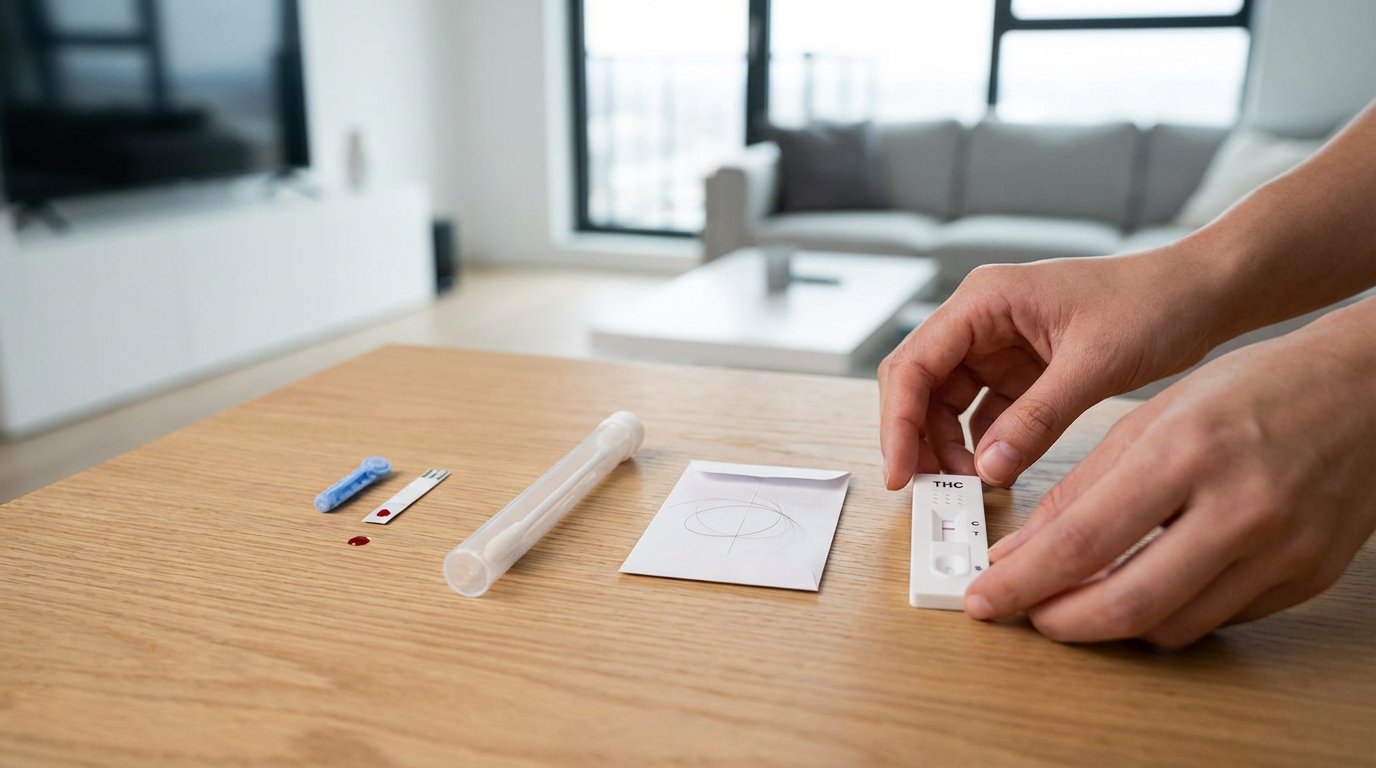 Understanding THC detection windows requires examining how each testing method interacts with the body's metabolic pathways and elimination processes. Weed detection in saliva and blood targets active THC, offering insight into recent consumption, blood tests detect THC for 12, 48 hours in occasional users and up to 7 days in chronic users, while saliva tests identify use within 24, 72 hours. Urine testing provides the broadest window, detecting inactive metabolites for 1, 3 days after single use and extending to 30 days or more with daily consumption. Hair follicle analysis offers the longest detection period at 90 days, though it's less reliable for acute use. Detection variability stems from usage frequency, body composition, THC potency, metabolic rate, and test sensitivity thresholds. Multiple factors influence detection outcomes, including method of consumption, gender, hydration levels, and individual metabolism. Blood tests measure concentrations in either whole blood or serum, with whole blood readings approximately half the value of serum or plasma measurements. False positives are rare in hair testing, with studies showing no non-users testing positive while 77% of heavy users and 39% of light users returned positive results.
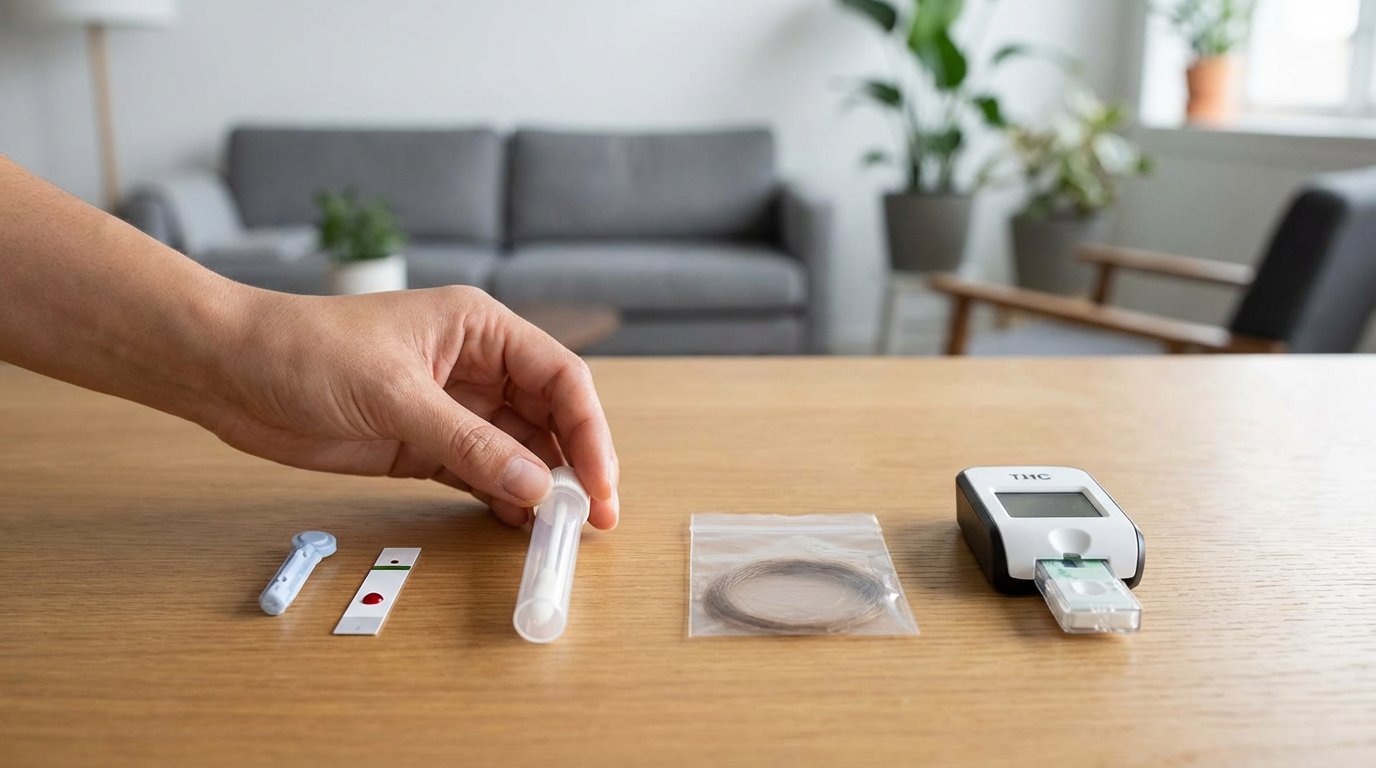 Blood tests demonstrate high analytical precision when measuring THC concentrations, yet they suffer from fundamental limitations in practical reliability. While LC-MS/MS methods detect THC with technical accuracy, blood concentrations correlate poorly with actual impairment, particularly among regular users. This weakness undermines their forensic utility compared to blood vs urine test for THC applications. Saliva tests offer noninvasive collection but face similar validity challenges. Their 8, 24 hour detection window doesn't reliably predict cognitive dysfunction, and false positives remain problematic for roadside screening protocols. Hair follicle analysis confirms chronic exposure over months but cannot determine recent use or impairment timing. External contamination risks and bias toward darker hair further compromise accuracy. Critically, none of these biofluid methods establish statistically valid thresholds linking THC levels to functional impairment. Research has documented cases of significant functional impairment occurring alongside low THC levels in biological samples. Individuals should wait 3-10 hours after cannabis consumption before engaging in safety-sensitive activities such as driving or operating machinery. Whole blood analysis provides critical advantages in forensic contexts, as it remains the only available specimen in many impaired driving and accident causation investigations where plasma separation is not feasible.
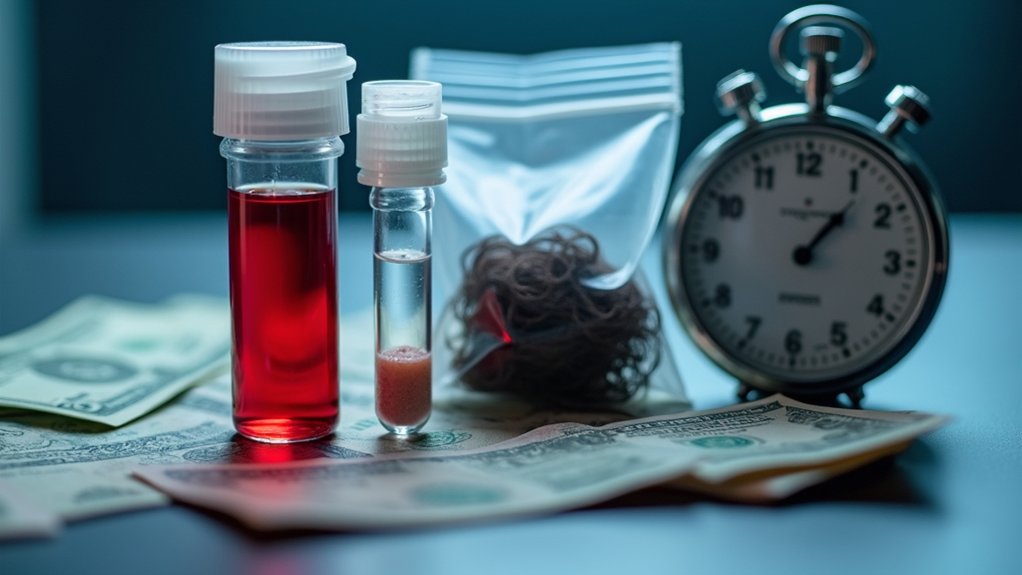 When you're selecting a THC detection method, cost and turnaround time greatly influence practical implementation. Blood tests command the highest price at $100, $400 with 1, 3 day results, while saliva tests offer the most economical option at $15, $75 with minutes-to-hours turnaround for rapid screening. You'll face a critical trade-off: lab-based methods deliver superior accuracy at 2, 4 times the cost of point-of-care alternatives, but onsite rapid tests provide immediate actionable results despite lower confirmatory precision.