Preparing for a
residential rehab stay doesn't have to feel overwhelming when you break it down into
manageable steps. Start by calling your facility to confirm their specific guidelines and restrictions. You'll want to organize your packing into
key categories: comfortable clothing, approved toiletries, essential documents, medications, and meaningful comfort items like journals or photos. Don't forget to gather insurance cards and medical records early. Below, you'll find detailed guidance for each step of your
preparation journey.
Call Your Rehab Facility First to Learn What's Allowed
Before you start packing for
residential rehab, you'll want to contact your facility directly to get their
specific guidelines. Each program has unique rules about clothing, toiletries, and personal belongings. Most facilities require alcohol-free toiletries and have specific dress codes you'll need to abide by. During your call, ask about
communication plans for staying connected with family through calls and letters. You should also inquire about
provided entertainment options like TVs, books, or games available on-site. Understanding laundry schedules helps you pack the right amount of clothing. Many facilities offer
free wireless Internet access, so ask if you can bring a laptop computer to stay connected. If you need
special accommodations like medical pillows or specialty items, request written approval in advance. Taking this step first saves you from repacking and guarantees a smoother check-in experience. You should also ask about
visitation and communication policies so your family knows when and how they can maintain contact during your stay.
Organize Your Packing List Into Five Key Categories
Once you've confirmed your
facility's specific requirements, you can start organizing your belongings into
five manageable categories. This approach makes
effective intake preparation straightforward and guarantees reduced stress on admission day.
Organizing belongings into five simple categories transforms intake preparation from overwhelming to manageable, setting the stage for recovery success.
Toiletries and personal hygiene includes non-aerosol body wash, shampoo, toothbrush, deodorant, and sunscreen.
Medications and health items covers prescriptions in original bottles, glasses, hearing aids, and facility-approved vitamins. Documents and identification should contain your state ID, insurance cards, medication lists, and advance directives. You'll also want to bring a
valid credit card for payment plans and prescription costs during your stay.
Reading and journaling materials encompasses notebooks, recovery books, puzzle books, and writing supplies. Consider packing photos of loved ones for emotional support, but ensure they are
in frames without glass for safety compliance. Finally, review
prohibited items carefully, electronics, aerosols, sharp objects, and alcohol-containing products aren't permitted. Using helpful communication tips from your initial call, cross-reference each category against facility guidelines. This
organized system ensures you'll arrive prepared and focused on your recovery journey.
What Clothes to Pack for Rehab
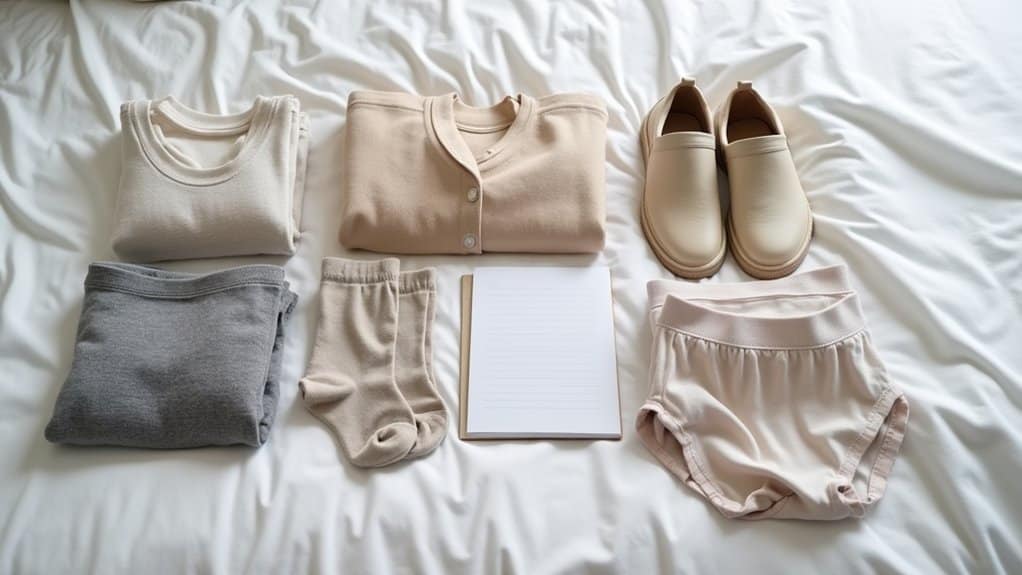
What should you actually pack in your suitcase for residential rehab? Focus on
comfortable, functional clothing that supports your recovery journey. Bring weather appropriate loungewear like
breathable t-shirts, loose pants, and layered options for changing temperatures. Pack
pajamas, a robe, and slippers with non-skid soles for nighttime comfort. You'll need
versatile workout options for therapy sessions and wellness activities. Athletic shoes,
modest activewear, and shorts (especially if you've had leg surgery) give therapists proper access during treatment. Don't forget flip-flops for shower areas and a one-piece swimsuit if your facility has a pool. Pack
one week's worth of clothing since you'll have laundry access. Label everything clearly and leave behind hoodies with strings, belts, and jewelry. Avoid clothing with
drug or alcohol references as these items are typically prohibited at treatment facilities. Prioritize modest, machine-washable items that let you move freely throughout your stay.
Gather Your Medical and Legal Documents Early
Gathering your medical and legal documents before
admission day eliminates unnecessary stress and
helps the treatment team understand your
complete history from the start. You'll want to
confirm proper identification by bringing your driver's license, Social Security card, and birth certificate or passport.
Preparing your documents ahead of time sets the stage for a smoother admission and faster, more personalized care.
Take time to compile legal paperwork that may affect your treatment, including:
- Court-mandated treatment orders or custody agreements
- Power of attorney documents if someone manages your affairs
- Any guardianship papers relevant to your care
Don't forget your medical records, including recent lab results, vaccination history, and previous treatment documentation. Bring a current list of all medications with dosages and your prescribing providers' contact information. You should also include
mental health evaluations and any psychiatric records that document your treatment history. Make sure to gather
insurance pre-authorization forms and your current insurance cards to ensure smooth processing of your coverage.
Having these documents ready allows your care team to create the most effective treatment plan.
Pack Toiletries That Meet Facility Guidelines
Because most rehab facilities enforce strict policies about personal care products, you'll need to check labels carefully before packing your toiletries. Buy unopened hygiene products in their original packaging, as staff will inspect everything during intake. Avoid alcohol-based items like mouthwash or perfume, and skip aerosol sprays and glass containers entirely. To save space, pack travel sized toiletries when possible. Most facilities require a 30-day supply, so plan accordingly. Whether you're preparing for a men's residence like Wabash Recovery or a women's facility like Elevate Recovery, which
accommodates 15 women in different recovery stages, these packing guidelines remain consistent. If you forget essential items, facilities
typically provide basic necessities to ensure you have what you need during your stay.
| Allowed Items |
Restricted Items |
| Solid deodorant |
Aerosol sprays |
| Alcohol-free shampoo |
Perfume or cologne |
| Manual razors (if permitted) |
Glass containers |
| Fragrance-free soap |
Alcohol-based mouthwash |
Contact your facility beforehand for specific guidelines. Label your items clearly to prevent mix-ups with other residents' belongings.
Bring Journals, Photos, and Comfort Items for Support
While
toiletries address your physical needs during treatment, journals, photos, and comfort items support your
emotional well-being throughout recovery. You can personalize journal entries to
process emotions and document your progress. Facilities typically provide composition books and pens, but bringing your own notebook adds familiarity to your therapeutic routine.
Your journal becomes a trusted companion, capturing emotions, tracking progress, and bringing familiar comfort to your healing journey.
Printed photos serve as
emotional anchors during difficult moments. You'll want to maintain photo album selections that remind you of your
support system back home, just remember frames with glass aren't permitted for safety reasons. Consider packing:
- A favorite blanket or pillow to make your space feel like home
- Photos of loved ones to reduce anxiety and homesickness
- A personal journal to foster mental clarity
- Approved books or recovery literature to support your therapeutic journey
All items require
admission approval and must fit within allocated storage space. These comfort items also help you maintain
spiritual and cultural connection to practices that are meaningful to your identity during treatment.
What Not to Pack: Items Most Facilities Restrict
Knowing what to leave behind matters just as much as knowing what to bring when you're preparing for
residential rehab. Most facilities prohibit
electronics with internet access, including laptops, tablets, smartwatches, and cell phones. You'll also need to leave weapons, sharp objects, and personal hygiene tools like nail clippers and disposable razors at home. Small sized mirrors and aerosol products typically aren't permitted.
Avoid packing clothing with drug, alcohol, or violence references, along with revealing attire. Leave high-value jewelry behind for safekeeping.
Excessive makeup should also stay at home, as most centers limit cosmetic items. You can't bring outside food, opened medications, or supplements.
Alcohol-containing items like mouthwash and hand sanitizer are restricted.
Video games, DVDs, and playing cards are also typically not allowed at most treatment centers. Contact your specific facility beforehand, they'll provide a
detailed list so you'll arrive fully prepared without
prohibited items.
Frequently Asked Questions
How Far in Advance Should I Start Packing for My Residential Rehab Stay?
You should start your
packing timeline about 7-10 days before admission. This gives you enough time to gather clothing essentials for a week's worth of outfits, including casual wear,
exercise clothes, and weather-appropriate layers. Starting early also lets you label your belongings, confirm facility rules on
permitted items, and secure your medications in original containers. Don't rush yourself, this buffer reduces stress and helps you feel more prepared for your stay.
Can Family Members Visit During My Stay and Bring Additional Items Later?
Yes, your family can typically visit during your stay, though you'll want to check your facility's
visiting schedule since many programs have a blackout period during the first few weeks. When it comes to bringing additional items later, most centers have strict
personal item policies, visitors usually can't bring outside food, electronics, or unapproved gifts.
Contact your facility beforehand so your loved ones know exactly what's permitted and can plan accordingly.
You'll want to contact the facility directly to confirm their
laundry services, as policies vary. Some centers handle
personal laundry needs alongside facility linens, while others only provide bed linens and towels. Ask about laundry frequency, many offer pickup schedules like Monday, Wednesday, and Friday with
48-hour turnaround. If personal clothing isn't included, pack 7-10 days' worth of clothing to stay comfortable between services or family visits bringing additional items.
Should I Bring Cash or a Debit Card for Personal Expenses During Treatment?
You'll want to bring both a small amount of
cash and a debit card for flexibility during your stay. Even better, consider using a
prepaid card to help manage spending limits and avoid overdraft concerns. Cash works great for vending machines, while cards handle larger purchases.
Check with your facility about their policies first, as some restrict cash handling. This approach keeps you prepared without unnecessary financial stress during treatment.
What Happens to My Belongings if Certain Items Are Confiscated at Admission?
When staff confiscate items during admission, the facility's
prohibited items policy determines what happens next. Typically, you'll have a few options:
sending items home with your loved one who accompanied you, having someone pick them up within 24 hours, or using personal storage options until discharge. You won't face judgment, these restrictions exist to
support your recovery. Contact your facility beforehand to understand their specific procedures and avoid surprises.

 Before you start packing for residential rehab, you'll want to contact your facility directly to get their specific guidelines. Each program has unique rules about clothing, toiletries, and personal belongings. Most facilities require alcohol-free toiletries and have specific dress codes you'll need to abide by. During your call, ask about communication plans for staying connected with family through calls and letters. You should also inquire about provided entertainment options like TVs, books, or games available on-site. Understanding laundry schedules helps you pack the right amount of clothing. Many facilities offer free wireless Internet access, so ask if you can bring a laptop computer to stay connected. If you need special accommodations like medical pillows or specialty items, request written approval in advance. Taking this step first saves you from repacking and guarantees a smoother check-in experience. You should also ask about visitation and communication policies so your family knows when and how they can maintain contact during your stay.
 What should you actually pack in your suitcase for residential rehab? Focus on comfortable, functional clothing that supports your recovery journey. Bring weather appropriate loungewear like breathable t-shirts, loose pants, and layered options for changing temperatures. Pack pajamas, a robe, and slippers with non-skid soles for nighttime comfort. You'll need versatile workout options for therapy sessions and wellness activities. Athletic shoes, modest activewear, and shorts (especially if you've had leg surgery) give therapists proper access during treatment. Don't forget flip-flops for shower areas and a one-piece swimsuit if your facility has a pool. Pack one week's worth of clothing since you'll have laundry access. Label everything clearly and leave behind hoodies with strings, belts, and jewelry. Avoid clothing with drug or alcohol references as these items are typically prohibited at treatment facilities. Prioritize modest, machine-washable items that let you move freely throughout your stay.
 Because most rehab facilities enforce strict policies about personal care products, you'll need to check labels carefully before packing your toiletries. Buy unopened hygiene products in their original packaging, as staff will inspect everything during intake. Avoid alcohol-based items like mouthwash or perfume, and skip aerosol sprays and glass containers entirely. To save space, pack travel sized toiletries when possible. Most facilities require a 30-day supply, so plan accordingly. Whether you're preparing for a men's residence like Wabash Recovery or a women's facility like Elevate Recovery, which accommodates 15 women in different recovery stages, these packing guidelines remain consistent. If you forget essential items, facilities typically provide basic necessities to ensure you have what you need during your stay.