Crack cocaine and crystal meth are both dangerous stimulants, but they're fundamentally different. Crack comes from coca plants and produces an intense
5-15 minute high, while meth is lab-made and keeps you wired for 6-12 hours. You'll recognize crack by its yellowish-brown rocks and meth by its glass-like crystals. Both cause severe addiction and health damage, though through different mechanisms. Understanding these distinctions can help you recognize the specific risks each substance carries.
Crack vs Meth: One Comes From Plants, One From Labs
When you examine the fundamental origins of
crack cocaine and
crystal methamphetamine, you'll find two substances that couldn't be more different in how they come into existence. The
origin source material for crack traces back to
coca leaves grown along South America's Andean ridge, while methamphetamine production occurs entirely in clandestine laboratories without any plant involvement. The extraction refinement process and
chemical transformation requirements differ markedly between these drugs. Crack's production involves converting powdered cocaine using baking soda and heat, a relatively simple procedure that
removes the hydrochloride from pure cocaine to create a smokable form.
Methamphetamine synthesis demands specialized chemical knowledge and equipment to build the molecule from scratch. The resulting crack forms into small, hard crystals that
resemble off-white rocks with a slightly higher density than candle wax. This "cooking" process
precipitates the cocaine base into solid chunks commonly referred to as "rocks." Raw material sourcing legality also varies considerably. Coca cultivation remains geographically restricted, whereas methamphetamine precursors can be obtained from diverse sources, including over-the-counter medications.
What Crack and Meth Look Like
When you're trying to distinguish between
crack cocaine and
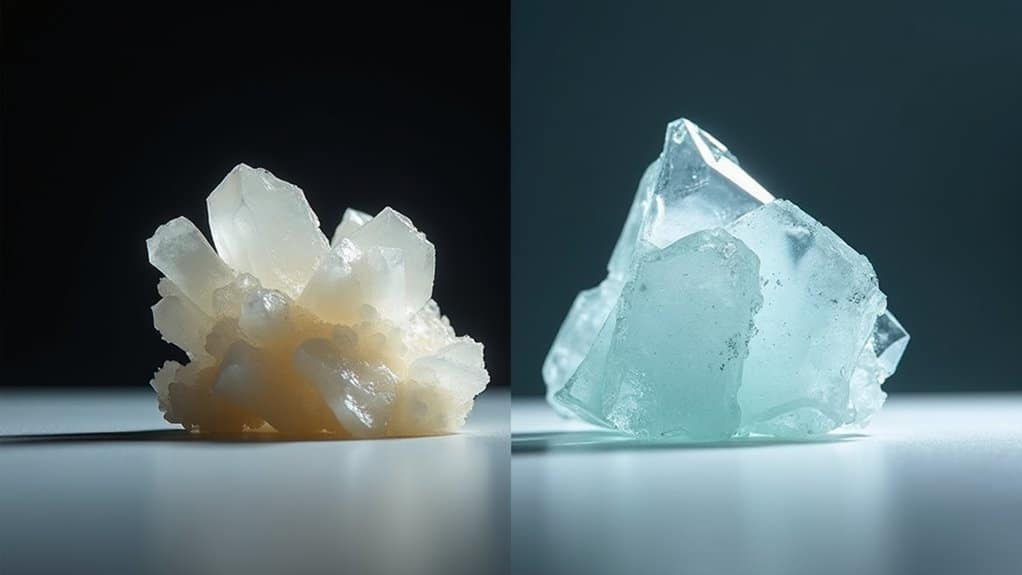
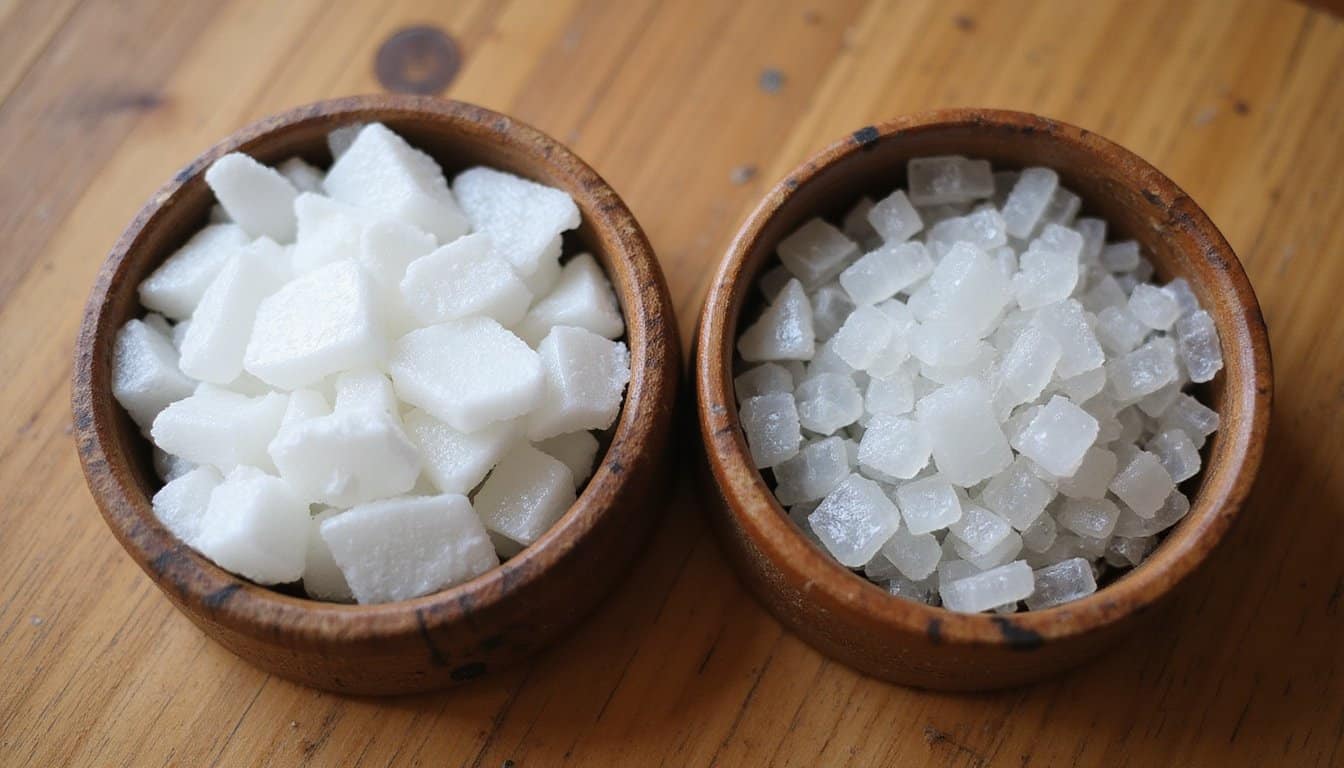
crystal methamphetamine, their physical appearances offer immediate visual cues that set them apart. Crack typically forms small, irregular rock-like chunks with an
off-white to yellowish-brown color and a hard, brittle texture that crumbles easily between your fingers. The size of crack rocks can
range from tiny crystals to pieces as large as a walnut. The surface of crack rocks is typically
rough, jagged, and irregular, with a waxy appearance that can vary in glossiness. When heated, crack emits a
distinct acrid odor often compared to burning plastic or rubber. Crystal meth, in contrast, resembles translucent glass shards with a
clear or slightly bluish tint, giving it an icy, crystalline quality that's distinctly different from crack's opaque, chalky appearance.
Crack's Rock-Like Appearance
Although
crack cocaine and
crystal methamphetamine both belong to the stimulant class, their physical appearances differ markedly, a distinction that can prove critical for parents, educators, and healthcare providers attempting to identify these substances. Recognizing the
physical symptoms of cocaine use can help in early detection and intervention efforts. Symptoms may include increased heart rate, heightened alertness, and noticeable changes in behavior. Understanding these signs is crucial for those in positions to support individuals who may be struggling with substance use. You'll recognize crack cocaine by its distinctive
rock-like chunks, ranging from tiny pebbles to grape-sized nuggets. The color typically spans
off-white to pale yellow in purer forms, though street versions often appear beige, tan, or grayish due to additives. When you handle these rocks, they feel
hard yet brittle, crumbling easily between your fingers and leaving a powdery, waxy residue. When heated, crack produces a
sharp, chemical-like smell often compared to burning plastic or a sweet chemical scent. Unlike powder cocaine's smooth, flour-like consistency, crack forms
jagged, irregular crystals broken from larger solidified masses. These stimulant drugs affect your central nervous system, targeting the brain dopamine system through the dopamine transporter.
Meth's Glass-Like Shards
Crystal methamphetamine presents an equally distinctive but strikingly different appearance from crack's chunite rocks. You'll notice methamphetamine forms glass-like shards resembling shattered ice or clear crystals with sharp, jagged edges. In addiction medicine, recognizing these visual markers helps identify stimulant abuse early.
| Feature |
Characteristic |
Clinical Significance |
| Color |
Clear, white, bluish |
Purity indicator |
| Texture |
Brittle, reflective |
Identifies substance use disorder |
| Shape |
Irregular shards |
Distinguishes route of administration |
| Size |
Grains to chunks |
Estimates dose quantity |
| Impurities |
Yellow or brown tints |
Suggests contamination risk |
The crystalline structure typically appears translucent or frosted. Street names like "glass" and "ice" directly reference this appearance. You should note that higher purity methamphetamine displays brighter, clearer coloring. Much of this crystal meth is
manufactured illegally in homemade labs, which contributes to variations in appearance and purity. Crystal meth is usually
smoked in a glass pipe to deliver an immediate, intense high that distinguishes it from other administration methods. Methamphetamine also emits a distinct
ammonia-like chemical odor that can help identify the substance or indicate nearby production.
Color and Texture Differences
Because accurate identification can inform clinical assessment and harm reduction strategies, understanding the distinct visual characteristics of
crack cocaine and
crystal methamphetamine serves practical purposes in addiction medicine and emergency care. Crack cocaine, a cocaine base form of freebase cocaine, appears as
off-white to pale yellow rocks with hard, brittle textures that crumble easily. You'll notice jagged, irregular surfaces with waxy or chalky qualities. Impurities create tan or grayish variations. Crystal methamphetamine presents as
clear to white crystals with smooth, glassy sheens. The translucent structure differs markedly from crack's opaque rocks. Both substances trigger
norepinephrine and serotonin disruption, causing significant
neurotoxicity with continued use. Recognizing these differences helps you understand drug dependence patterns and supports appropriate intervention when encountering these substances clinically.
Why a Meth High Lasts Hours but Crack Fades in Minutes
When you smoke
crack cocaine, the
high crashes almost as quickly as it arrives, typically within 5 to 15 minutes, while
methamphetamine's effects can persist for 6 to 12 hours or longer. This
dramatic difference in duration stems from each drug's distinct mechanism of action
dopamine systems employ. Crack blocks dopamine reabsorption briefly, creating intense
reward pathway activation that dissipates rapidly. The onset of action hits within seconds, but short term effects fade just as fast, driving compulsive redosing. This rapid cycling pattern often leads to
cardiovascular issues and respiratory problems as users repeatedly chase the fleeting high. Methamphetamine works differently, it blocks reuptake while simultaneously triggering massive dopamine release. This dual action sustains the high for hours and causes more severe long term effects, including irreversible neuron damage. The extended duration of meth's effects contributes to why users often experience more dramatic and visible symptoms, including
severe dental decay, skin sores, and significant weight loss. Understanding this duration difference helps explain why meth enables destructive multi-day binges while crack drives rapid cycling patterns. Without professional treatment,
overcoming addiction to either substance is extremely difficult due to the powerful physical and psychological dependence these drugs create.
agina meth addiction risks can lead to serious health complications, including cardiovascular issues and heightened susceptibility to infectious diseases. As users spiral deeper into dependency, their judgment and decision-making abilities become increasingly impaired, often resulting in dangerous behaviors that exacerbate the addiction cycle. It is crucial for individuals facing these challenges to seek comprehensive treatment options that address both the physiological and psychological aspects of their addiction.
How People Use Crack and Meth Differently
The
routes of administration for
crack and meth create fundamentally different patterns of drug use, even though both substances target your brain's
reward system. Your
methods of administration shape
addiction trajectory considerably. Crack's primarily smoked through a glass pipe, delivering an instant high that fades within minutes. This drives frequency of use patterns characterized by rapid redosing, you're chasing that initial rush repeatedly. Meth offers more versatility: smoking drugs, snorting, injecting, or swallowing, allowing users to customize their experience. The tools and paraphernalia differ accordingly. Crack requires a rounded glass pipe, while meth users employ various equipment depending on route specific risks they're willing to accept. Some crack users also
mix it with marijuana or tobacco to modify the smoking experience. Those who inject either substance often use
belts or rubber tourniquets to make veins more visible before administration.
Demographic use trajectories reveal cocaine users enter treatment around age 32.6, whereas meth users seek help earlier at 27.8 years, reflecting meth's accelerated devastation. When crack is inhaled, it
enters the brain in seconds, which explains why its effects hit so intensely but dissipate quickly compared to other methods.
How Crack and Meth Destroy Your Body
Your body becomes a
battleground the moment crack or meth enters your bloodstream, with each substance launching distinct attacks on pivotal organs while sharing a common capacity for catastrophic damage.
Crack and meth wage war on your body from the first hit, targeting vital organs with devastating precision.
Key Physical Destruction Points:
- Cardiovascular system: Heart attacks cause 25% of deaths among cocaine users aged 18-45, while 71% of long-term users show heart disease on MRIs
- Respiratory system: Crack lung produces acute breathing difficulties, destroyed alveolar walls, and increased tuberculosis risk
- Organ failure risks: Rhabdomyolysis releases toxins causing kidney and liver damage requiring emergency intervention
- Vascular and systemic harm: Permanent blood vessel damage triggers strokes, seizures, and aortic dissection
- Physical manifestations: Severe weight loss, tooth decay, and muscle twitches reveal internal destruction
The
addiction potential compounds these dangers, driving repeated exposure that accelerates organ deterioration.
What Crack and Meth Do to Your Brain
When you use
crack or meth, both drugs flood your brain's
reward system with dopamine, but meth releases up to 1,200 percent more dopamine than baseline compared to crack's 350 percent, a difference that explains meth's more severe
neurotoxic effects. Your brain's reward circuitry becomes hijacked as these substances override natural pleasure responses, making everyday activities feel meaningless without the drug. Over time, both substances cause lasting
brain damage, but meth's prolonged presence in neural tissue produces more permanent injury to dopamine neurons, with studies showing transporter reductions of 15 to 40 percent even after 14 months of abstinence.
Dopamine Flood Differences
Because
crack cocaine and
crystal methamphetamine both target your brain's
dopamine system, many people assume they cause similar neurological damage, but the reality reveals two distinctly different assault patterns on your neural circuitry. When comparing cocaine vs meth effects, the
dopamine release intensity differs dramatically. Meth triggers three times more dopamine than crack, creating a quantitative dopamine impact that overwhelms your neurons. The half life duration compounds this damage, crack's effects fade within minutes, while meth's persist for hours.
- Meth both blocks reuptake and forces additional dopamine release
- Crack only prevents dopamine reabsorption without triggering extra release
- Meth's prolonged presence accelerates dopamine depletion and toxicity
- Chronic meth use causes measurable brain shrinkage in emotional centers
- Neurocognitive impairment appears more severe and persistent with methamphetamine
Reward System Hijacking
Both
crack cocaine and
crystal meth zero in on the same neural target, the
nucleus accumbens, your brain's
reward processing center that normally responds to food, water, and social connection. These drugs trigger initial euphoria intensity that far exceeds natural pleasures, effectively beginning the process of reward system hijacking. When you use either substance, you're creating
neurotransmitter overload. Crack blocks your dopamine transporter, while meth both blocks reuptake and forces additional dopamine release. Research shows these drugs activate the same neurons responsible for processing natural rewards, but with dramatically stronger signals. The damage compounds with repeated use. Your nucleus accumbens cells become progressively disorganized, responding erratically to normal pleasures. During withdrawal disruption, you'll experience this as
anhedonia, the inability to feel joy from activities that once satisfied you.
Long-Term Brain Damage
The
reward system hijacking described earlier represents just the beginning of these drugs' assault on your brain. Both crack and meth cause
progressive structural brain changes that accumulate with continued use, leading to
cerebral atrophy and prefrontal cortex damage that impairs your decision-making abilities. You'll face significant
vascular and hemorrhagic damage, including mini-strokes and increased aneurysm risk. The
neurochemical and aging effects accelerate brain aging, elevating your dementia risk and causing Parkinson's-like symptoms. These changes fuel
mental health disorders, with psychosis affecting approximately 40% of regular meth users.
- Impaired memory and executive function persisting months after abstinence
- Cerebral vasculitis inflaming blood vessels in your brain
- Behavioral and functional deficits affecting impulse control
- Premature brain aging mimicking Alzheimer's symptoms
- Increased stroke and seizure risk from vascular constriction
Is Crack or Meth More Addictive?
Determining whether
crack or meth carries greater
addiction potential proves challenging because both substances hijack your
brain's reward circuitry with devastating efficiency.
Crack cocaine creates intense cravings through rapid dopamine surges that crash within minutes, driving compulsive redosing.
Methamphetamine maintains heightened dopamine for hours, supporting extended binges that accelerate tolerance development. Research shows
addiction severity rates are virtually equivalent between these substances. Your brain develops psychological dependency quickly with either drug, though the patterns differ. Crack's brief euphoria creates urgent, repetitive use cycles, while meth's prolonged effects lead to multi-day binges causing severe tolerance buildup. Both substances rewire your reward pathways, making natural pleasures feel inadequate. If you're struggling with either addiction, specialized treatment addressing your specific use patterns offers the best path toward
recovery.
Frequently Asked Questions
How Long Do Crack and Meth Stay Detectable in Urine Drug Tests?
You'll typically
test positive for crack cocaine for 1-4 days after use, though heavy use can extend detection to
7-14 days. Meth stays detectable longer, usually
3-5 days for occasional use and 7-10 days or more with chronic use. Your metabolism, hydration, body composition, and frequency of use all influence these windows. If you're concerned about an upcoming test or struggling with use, reaching out for support is a strong first step.
Can You Die From Crack or Meth Withdrawal Symptoms?
You won't die directly from
crack or meth withdrawal, unlike alcohol or benzodiazepine detox, stimulant withdrawal doesn't cause fatal seizures or physiological collapse. However, you shouldn't underestimate the risks.
Severe depression and suicidal thoughts can emerge during withdrawal, creating serious indirect dangers that require monitoring. The intense cravings also dramatically increase your relapse risk, which could lead to overdose.
Seeking professional support helps you navigate these challenges safely.
Which Drug Causes More Emergency Room Visits Each Year?
Cocaine (including crack) causes more
emergency room visits annually. In 2011,
cocaine was involved in approximately 505,224 ER visits, roughly 40% of all drug-related emergency visits. You should know that most cocaine-related ER visits now involve
polysubstance use, with about 72% of cases in 2023 including other substances like alcohol, cannabis, or fentanyl. If you're struggling with either substance, evidence-based treatment can help you recover.
Does Meth Mouth Damage Reverse After Someone Stops Using?
Meth mouth damage rarely reverses completely once decay advances, but you can achieve
partial improvements. If you've caught it early, stopping methamphetamine use combined with
rigorous dental hygiene may reverse some damage. Your saliva production typically restores within 30 days of cessation. For advanced cases, you'll likely need extractions,
dentures, or implants. Seeking dental care before teeth fall out maximizes your outcomes, the ADA notes meth mouth can destroy healthy teeth within one year.
What Medications Help Treat Crack Versus Meth Addiction?
You'll find that
no FDA-approved medications exist specifically for either addiction, but several show promise. For
crack cocaine,
topiramate, propranolol, and disulfiram may help reduce use and improve treatment retention. For meth addiction, options remain even more limited, with treatment primarily relying on behavioral therapies. Your doctor might consider off-label medications to manage specific withdrawal symptoms like anxiety or depression while you engage in counseling-based recovery programs.

 When you examine the fundamental origins of crack cocaine and crystal methamphetamine, you'll find two substances that couldn't be more different in how they come into existence. The origin source material for crack traces back to coca leaves grown along South America's Andean ridge, while methamphetamine production occurs entirely in clandestine laboratories without any plant involvement. The extraction refinement process and chemical transformation requirements differ markedly between these drugs. Crack's production involves converting powdered cocaine using baking soda and heat, a relatively simple procedure that removes the hydrochloride from pure cocaine to create a smokable form. Methamphetamine synthesis demands specialized chemical knowledge and equipment to build the molecule from scratch. The resulting crack forms into small, hard crystals that resemble off-white rocks with a slightly higher density than candle wax. This "cooking" process precipitates the cocaine base into solid chunks commonly referred to as "rocks." Raw material sourcing legality also varies considerably. Coca cultivation remains geographically restricted, whereas methamphetamine precursors can be obtained from diverse sources, including over-the-counter medications.
 The routes of administration for crack and meth create fundamentally different patterns of drug use, even though both substances target your brain's reward system. Your methods of administration shape addiction trajectory considerably. Crack's primarily smoked through a glass pipe, delivering an instant high that fades within minutes. This drives frequency of use patterns characterized by rapid redosing, you're chasing that initial rush repeatedly. Meth offers more versatility: smoking drugs, snorting, injecting, or swallowing, allowing users to customize their experience. The tools and paraphernalia differ accordingly. Crack requires a rounded glass pipe, while meth users employ various equipment depending on route specific risks they're willing to accept. Some crack users also mix it with marijuana or tobacco to modify the smoking experience. Those who inject either substance often use belts or rubber tourniquets to make veins more visible before administration. Demographic use trajectories reveal cocaine users enter treatment around age 32.6, whereas meth users seek help earlier at 27.8 years, reflecting meth's accelerated devastation. When crack is inhaled, it enters the brain in seconds, which explains why its effects hit so intensely but dissipate quickly compared to other methods.